




Blog Post 3 - 3/25/16 - Corrine Valenti

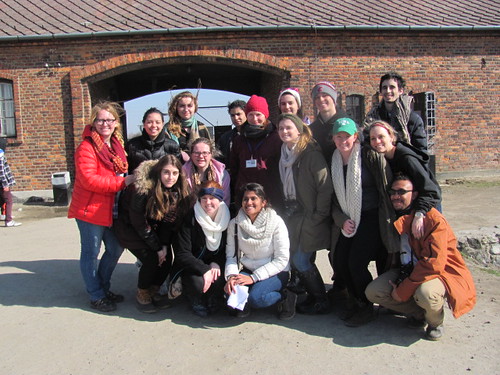
This experience has expanded my knowledge beyond measure and shaped me into a stronger and more compassionate human being. Seeing the horrors of Auschwitz in person, walking the ground where so many perished, is truly indescribable. Walking through the barrack with the remains of human hair encased in glass, torn from the victims upon arrival, was one of the most chilling experiences I have ever had. An intense question I have been faced with this week has been where was God in Auschwitz?
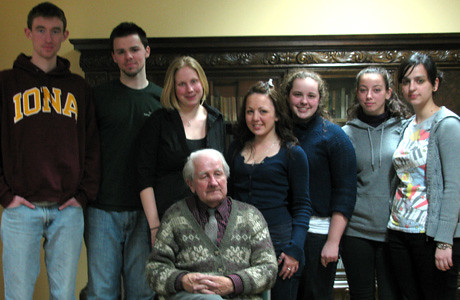
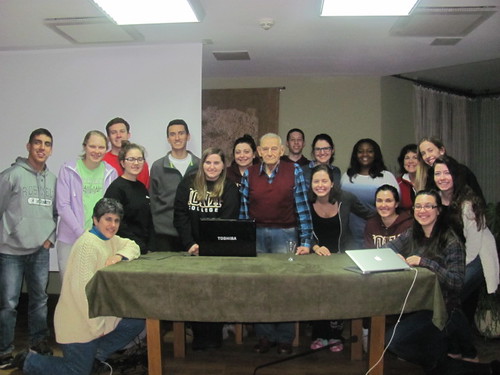
We have examined this question in a multitude of ways during this week: walking the footsteps of prisoners through Auschwitz I and Auschwitz II-Birkenau, speaking with Mr. Ignacy Krasnokuki a 91-year old Holocaust survivor, visiting the art exhibit of Christian survivor Marian Kociniak, and listening to two powerful lectures by Father Manfred Deselaers and historian Teresa Wontor-Cichy.
Auschwitz was a place of pure and utter evil however that evil, in my opinion, did not succeed. The goal of the Nazi party, to completely eliminate the Jewish people from existence, was not achieved because Judaism is still alive today as evidenced by the creation of the State of Israel and my group attending a Shabbat service in Kraków on Friday evening. Prisoners showed great deals of bravery, hope, and faith in the camp that I previously thought was impossible. Just to give one example, a group of Sonderkommando, prisoners responsible for emptying the gas chambers and burning the bodies in the crematorium, in Auschwitz II-Birkenau revolted in 1944 and successfully destroyed one of the gas chambers. They were all executed for their bravery and died as martyrs. They found purpose and faith in the face of death.
Although the evils experienced in the camps were unimaginable, love and faith were never completely lost. Something that was very powerful for me when listening to the story of Mr. Krasnokuki was his discussion of his "camp brothers". Krasnokuki was separated from his parents and two elder brothers during the war, a fate I could only imagine in my worst nightmares. He like so many others faced the Nazi death camps completely alone. He described to us his "camp brothers", a small group of men who he met in the camp who vowed to stick together and help each other survive. "For [we] are all children of God through faith" Galatians 3:26. These strangers, experiencing hell, created a beautiful pact, brothers in every sense of the word; children of God.
When listening to Father Manfred's final lecture I experienced God's presence in a powerful way. My parents, two of the most incredible people in the world, love me beyond measure. They were extremely nervous about me going on this trip because of the state the world is in right now. However, despite their worries they gave me the freedom to make my own choices and sometimes mistakes. No matter where my choices lead me, even if they are mistakes, I know my parents will be there to guide me through them. This is how I look at my relationship with God. He loves each and every one of His children so much that He granted us the freedom to choose. This all powerful God loves you so much He grants you freedom just like my parents did for me. Unfortunately this freedom comes at a cost. Because we have the ability to choose sometimes our choices hurt others. This happened in Europe during World War II to devastating proportions. God has the power to alleviate all suffering from the world but He entrusts part of that responsibility to His children.
World War II is a shameful look into the horrors that can happen if we ignore the uniqueness God granted to each person. Labeling people into categories is extremely dangerous and something I plan to stop myself from doing moving forward. We each have a responsibility to creating God's love on Earth because simply saying "never again" is not enough. "Thy will be done on earth as it is in heaven" (Lord's Prayer). I have come to realize through my journey to Auschwitz that the real question is not where was God but where was humanity during the Holocaust?

This experience has expanded my knowledge beyond measure and shaped me into a stronger and more compassionate human being. Seeing the horrors of Auschwitz in person, walking the ground where so many perished, is truly indescribable. Walking through the barrack with the remains of human hair encased in glass, torn from the victims upon arrival, was one of the most chilling experiences I have ever had. An intense question I have been faced with this week has been where was God in Auschwitz?
We have examined this question in a multitude of ways during this week: walking the footsteps of prisoners through Auschwitz I and Auschwitz II-Birkenau, speaking with Mr. Ignacy Krasnokuki a 91-year old Holocaust survivor, visiting the art exhibit of Christian survivor Marian Kociniak, and listening to two powerful lectures by Father Manfred Deselaers and historian Teresa Wontor-Cichy.
Auschwitz was a place of pure and utter evil however that evil, in my opinion, did not succeed. The goal of the Nazi party, to completely eliminate the Jewish people from existence, was not achieved because Judaism is still alive today as evidenced by the creation of the State of Israel and my group attending a Shabbat service in Kraków on Friday evening. Prisoners showed great deals of bravery, hope, and faith in the camp that I previously thought was impossible. Just to give one example, a group of Sonderkommando, prisoners responsible for emptying the gas chambers and burning the bodies in the crematorium, in Auschwitz II-Birkenau revolted in 1944 and successfully destroyed one of the gas chambers. They were all executed for their bravery and died as martyrs. They found purpose and faith in the face of death.
Although the evils experienced in the camps were unimaginable, love and faith were never completely lost. Something that was very powerful for me when listening to the story of Mr. Krasnokuki was his discussion of his "camp brothers". Krasnokuki was separated from his parents and two elder brothers during the war, a fate I could only imagine in my worst nightmares. He like so many others faced the Nazi death camps completely alone. He described to us his "camp brothers", a small group of men who he met in the camp who vowed to stick together and help each other survive. "For [we] are all children of God through faith" Galatians 3:26. These strangers, experiencing hell, created a beautiful pact, brothers in every sense of the word; children of God.
When listening to Father Manfred's final lecture I experienced God's presence in a powerful way. My parents, two of the most incredible people in the world, love me beyond measure. They were extremely nervous about me going on this trip because of the state the world is in right now. However, despite their worries they gave me the freedom to make my own choices and sometimes mistakes. No matter where my choices lead me, even if they are mistakes, I know my parents will be there to guide me through them. This is how I look at my relationship with God. He loves each and every one of His children so much that He granted us the freedom to choose. This all powerful God loves you so much He grants you freedom just like my parents did for me. Unfortunately this freedom comes at a cost. Because we have the ability to choose sometimes our choices hurt others. This happened in Europe during World War II to devastating proportions. God has the power to alleviate all suffering from the world but He entrusts part of that responsibility to His children.
World War II is a shameful look into the horrors that can happen if we ignore the uniqueness God granted to each person. Labeling people into categories is extremely dangerous and something I plan to stop myself from doing moving forward. We each have a responsibility to creating God's love on Earth because simply saying "never again" is not enough. "Thy will be done on earth as it is in heaven" (Lord's Prayer). I have come to realize through my journey to Auschwitz that the real question is not where was God but where was humanity during the Holocaust?


